EN
EN  ES
ES  FR
FR  DE
DE  AR
AR  PT
PT  RU
RU  JA
JA  IT
IT  KO
KO  TR
TR  NL
NL  PL
PL  ZH
ZH 



The Rapid Growth of AI Hardware
As technology rapidly advances, AI has undoubtedly taken center stage in today’s tech landscape. From smart voice assistants to autonomous driving, from image recognition to medical diagnostics, AI is transforming industries at an unprecedented pace. In 2024, Gorzim identified the rapid growth of the AI hardware market and made a strategic move to dive deeper into the industry, uncovering key trends and emerging innovations.
Throughout 2024, we witnessed a surge of new players, innovative products, and ambitious startups entering the AI hardware market. These pioneers took bold steps, launching products, engaging early adopters, and continuously refining their designs. As we enter 2025, the industry stands at the brink of large-scale commercialization. While predicting AI’s long-term trajectory is challenging, the next three to five years hold foreseeable trends that are set to define the industry’s future. Let’s explore some of the major trends that will shape AI hardware across different sectors.
AI Companion Devices: The Future of Smart Living
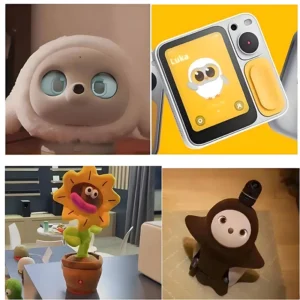
The AI companion device market was initially popularized by Lovot, a Japanese emotional therapy robot launched in 2019. Since then, over 40,000 units have been sold worldwide, with Japan remaining its primary market. Lovot’s success sparked enthusiasm among companies eager to tap into AI-powered companionship.
In 2024, companies such as Haivivi, Folotoy, and Yijia Yiban launched their own AI companion products, achieving significant sales volumes. According to our previous analysis, How Are the First AI Companion Hardware Devices Performing in the Market?
By 2025, we expect market acceptance to reach new heights, with leading products achieving sales in the hundreds of thousands or even millions, solidifying their status as category-defining bestsellers.

Key Factors Defining Next-Gen AI Companion Devices
AI functionality is essential, but engaging design matters more. AI is no longer a novelty; the real differentiator will be how enjoyable and engaging the product is. A successful AI companion must be a fun, shareable, and emotionally resonant toy rather than a mere showcase of AI capabilities.
Strong IP integration to build lasting appeal. Brands leveraging well-known IPs (e.g., anime, celebrities, or cultural icons) can rapidly build a loyal customer base. Successful examples include Nezha-themed AI toys and the Jay Chou-inspired AI robot. Future AI companions will integrate IP-driven AI models, enhancing engagement through familiar characters.
Expanding beyond child-focused products. While many AI companion devices cater to children, there is an untapped market for adult users seeking emotional connection. As global birth rates decline, single-living households grow, and pet ownership increases, AI companions tailored for adults and young professionals will gain traction.
Advanced interactive capabilities. AI companions in 2024 introduced diverse interaction modes, such as gesture control, emotion recognition, and voice-triggered activation. By 2025–2028, we will see even more innovative multi-sensory interactions enhancing user engagement.
AI Glasses Market Growth: A Game-Changer in Wearables
Compared to AI toys, the AI glasses industry presents greater technical challenges and higher barriers to entry. In 2024, Ray-Ban Meta AI glasses sold over one million units, proving substantial demand in this category.

Several key technologies, such as Micro LED and waveguide optics, have reached commercial maturity, resolving major constraints related to size, power efficiency, and display quality. However, battery life remains a crucial hurdle.
Battery Life Becomes a Critical Factor
Currently, most AI glasses offer less than four hours of battery life—far from sufficient for all-day wear. Brands are now exploring solid-state batteries and ultra-low-power chips to extend usage times. For instance:
- INMO X optimizes computational photography to minimize power consumption, allowing extended wear.
- Halliday AI glasses, weighing only 35g, offer up to 12 hours of intermittent use after a one-hour charge.
Market Segmentation and Pricing
AI glasses can be categorized into three tiers based on functionality:
- Audio-only AI glasses – Focus on AI-powered voice assistants.
- Audio + Camera AI glasses – Provide real-time photography and AI-enhanced vision.
- Display-integrated AI glasses – Incorporate AR or HUD-like displays for an immersive experience.
Competition is intensifying as major tech giants join the race:
- Xiaomi is rumored to launch its AI glasses alongside the Xiaomi 15 Ultra.
- Huawei and OPPO are also actively investing in AI glasses R&D.
- Meta, Apple, and Google continue pushing forward with AI-enhanced smart eyewear solutions.
With increasing competition, AI glasses prices are expected to stratify into premium ($300+) and budget-friendly ($100-$200) segments. The product category will likely stabilize into specialized use cases like translation, education, travel, and business meetings rather than replacing smartphones outright.
Final Thoughts: AI Hardware Trends 2025-2028
Standing at the start of 2025, the AI hardware industry is on the brink of mass adoption. AI glasses, AI wearables, and AI companions are maturing, while humanoid robots and embodied AI are inching closer to practical implementation.
From 2025 to 2028, competition will intensify, driving technological breakthroughs across batteries, sensors, computing, and human-AI interaction. AI hardware will continue to redefine everyday experiences, shaping the future of smart living.
About Gorzim
Gorzim is a visionary leader in high-performance electronic design and manufacturing. We explore the intersection of artificial intelligence and smart hardware, empowering startups and enterprises through cutting-edge technology and supply chain integration.
We believe most hardware products deserve a complete AI-driven redesign, and we are excited to grow alongside AI pioneers, ushering in a smarter future together.